Case Study

Target: up&up

Making a value brand more valuable.

In the fierce battlefield of private label retail, Target’s up&up line isn’t just surviving—it’s thriving. With $3 billion in sales and over 2,000 SKUs, this private label powerhou...

In the fierce battlefield of private label retail, Target’s up&up line isn’t just surviving—it’s thriving. With $3 billion in sales and over 2,000 SKUs, this private label powerhouse has transformed from a cost-cutting alternative into a brand consumers love, offering premium products at 10-30% savings versus national brands.

When Target reformulated 40% of up&up’s products and expanded into new territories—including pet grooming, moving supplies and oral care—we worked closely with them to solve a paradox: How do you make a value brand feel more valuable?

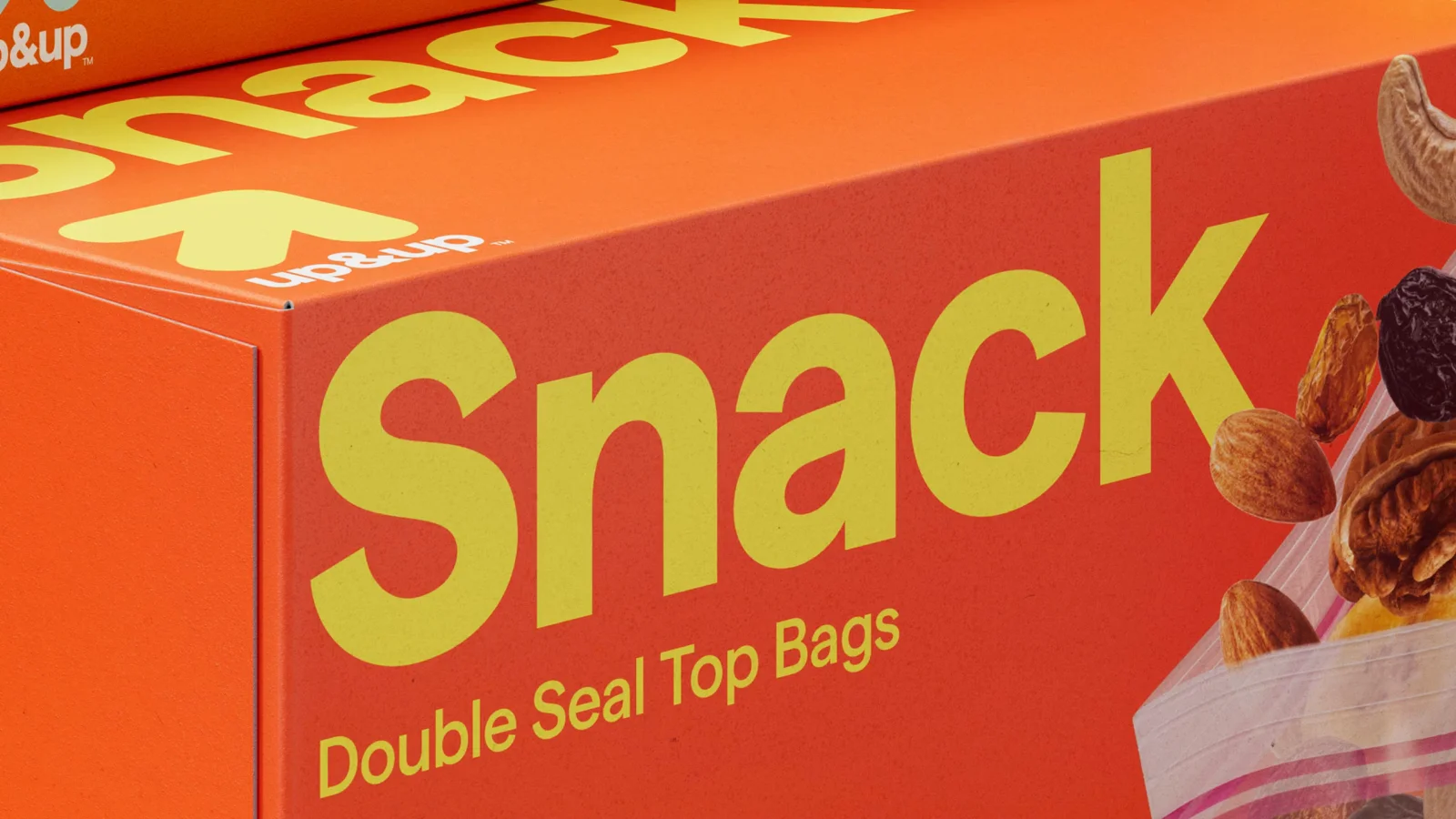
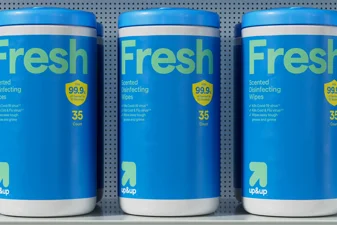
The solution we developed in partnership with their team is a new, vibrant design system that adapts to each category’s quality cues. Beauty products now feature premium aesthetics, while household essentials maintain functional clarity—all unified by a new brand logotype. Category-relevant palettes and enhanced navigation cues strengthen overall shelf presence, while color blocking creates amplified shelf pop. Beyond new visual design, occupational therapists helped improve packaging form and functionality, particularly for frequently-used items like body lotions and household cleaning products. The redesign also advances Target’s sustainability goals by reducing plastic usage and incorporating paper alternatives where possible.

IMPACT
Guests report they can more easily navigate up&up products across its many categories. The evolution has strengthened shoppability, recognition and up&up brand preference.

In fact, everyone here swears by the new up&up Ocean Breeze & Bergamot Hand Soap. You can try it, too.

It’s all over our offices.


COLLINS
Antonia LazarMorgan LightOilang MauiDaniel FerroOliver DellBarney StepneyXinle HuangRohan RegeJaeyou ChungMason LinKristine LimJing Qi FanMegan BowkerArielle KroloffL.A. CorrallBeth JohnsonAlex AthanasiouMichelle BrandemuehlKevin ChaoSean Danz
Target Creative Team
3D
Pedro Veneziano
Photography
Mari Juliano

Augments

Augments are add-on components or properties that enhance a design system’s performance. They introduce new capabilities, expand functionality and improve how the system works across contexts.

Augments

Augments are add-on components or properties that enhance a design system’s performance. They introduce new capabilities, expand functionality and improve how the system works across contexts.

Validated Versatility

We pressure test our designs across every touchpoint and context—from app tiles to billboards, screens to swag. This rigorous performance testing ensures that your brand remains consistent, recognizable and effective everywhere it lives for as long as it lives.

Shelf Pop

A performance property that ensures packaging visually pops on crowded shelves, driving purchase decisions in the critical 2.5-second scan window. High-contrast colors, bold typography and distinct shapes boost brand recognition by up to 80%.

Choice Architecture

A component augment that combines color coding, icons, and hierarchy to guide consumers effortlessly through product lines at shelf. By reducing decision fatigue and enabling clear differentiation among SKUs, it empowers consumers to make informed choices at a glance.

Decision Arc

A performance property that choreographs the flow of information from first glance to final selection. By aligning visual hierarchy with decision points, it ensures packaging reveals essential details at precisely the right moments, creating an intuitive, engaging journey.

Extensibility

A performance property that ensures identity systems can integrate future innovations and modules without losing coherence.

Shelf Signal

A component augment that establishes a single, powerful visual element—shape, color or image—designed to cut through clutter and draw attention at the shelf.

Impact

Press